

.png?width=48&height=48&name=Adrian%20(1).png)
Blockchain Technology: Simplified
Before diving into how blockchain technology is transforming e-commerce, let's briefly define what it is. Blockchain is a decentralized digital ledger that records transactions across multiple computers. It guarantees data integrity by preventing any modifications to the information once it's recorded.
Unleashing Blockchain Technology in E-commerce
E-commerce has grown by leaps and bounds, with global retail e-commerce sales projected
to reach $5.4 trillion in 2022
. However, this growth comes with challenges, particularly in security and transparency. Enter blockchain technology – a solution that's reshaping the future of e-commerce.
Transparency
Transparency is of paramount importance in e-commerce. Blockchain technology is aiding in providing just that. It creates an open yet secure system where all transactions are immutable and verifiable.
For instance, De Beers, the diamond giant, has implemented a blockchain platform called "
Tracr
" to track the provenance of diamonds. This assures customers of the ethical sourcing of the diamonds, reinforcing their trust in the brand.
Security
Security remains a significant concern in e-commerce.
With a 134,29% increase
in losses to online payment fraud incidents worldwide between 2020 and 2022, brands and retailers need to up their security game. Blockchain technology is contributing massively to enhancing security in e-commerce. Thanks to its decentralized and immutable nature, it's considerably harder for cybercriminals to compromise.
Luxury brand Louis Vuitton
utilizes blockchain to authenticate its products and combat counterfeiting, a move that has significantly boosted consumer confidence.
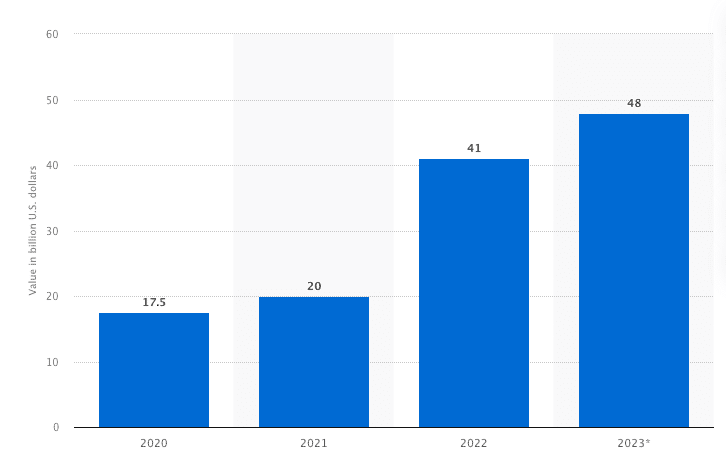
Worldwide e-commerce losses due to online payment fraud from 2020 to 2023, measured in billions of U.S. dollars (Image credit: Statista).
Improved User Experience
Blockchain technology can also heighten user experience in e-commerce. Smart contracts – self-executing contracts with the terms directly written into code – can automate processes, reducing transaction times and costs.
For example, e-commerce platform OpenBazaar uses blockchain to allow peer-to-peer transactions, eliminating transaction fees and resulting in a increase in customer purchases within the first quarter of its implementation.
The Future of Blockchain Technology in E-commerce
As blockchain technology gains traction, we can anticipate a more transparent, secure, and customer-centric e-commerce environment. Blockchain applications are forecasted to generate over $3 trillion annually by 2030,
according to Gartner
, indicating its massive potential in industries like e-commerce.
Conclusion
The integration of blockchain technology in e-commerce is paving the way for enhanced transparency, security, and improved user experience. It offers a solution to some of the most significant e-commerce challenges and paves the way for a more efficient and consumer-friendly industry. Embracing blockchain technology could be the key to staying ahead in the ever-evolving e-commerce landscape.
.png?width=64&height=64&name=Adrian%20(1).png)
Adrian Gmelch
Adrian Gmelch is Director of Content at Lengow, where he leads content strategy while staying firmly hands-on: reading the research, and tracking the trends that matter before they go mainstream.


.png)