

.png?width=48&height=48&name=Adrian%20(1).png)
What is Generative AI?
Generative AI refers to a type of artificial intelligence (AI) that can
create new content, such as text, images, or videos, similar to what a human might produce
. In the context of e-commerce, Generative AI can be used to create product descriptions, generate product images, and even design new products.
Generative AI uses deep learning techniques such as
neural networks
,
variational autoencoders
(VAEs), and
generative adversarial networks
(GANs) to learn patterns in existing data and then generate new content based on those patterns. Some of the known examples of Generative AI are Google Bard, Dall-E, Bing, and
ChatGPT
.
A
survey
conducted in 2023 among marketing and advertising professionals (e-commerce is part of it) in the United States revealed that
37% of respondents had utilized generative AI to support their work-related tasks
. The graph below shows the adoption rate of generative AI in the workplace in the US in 2023, by industry:
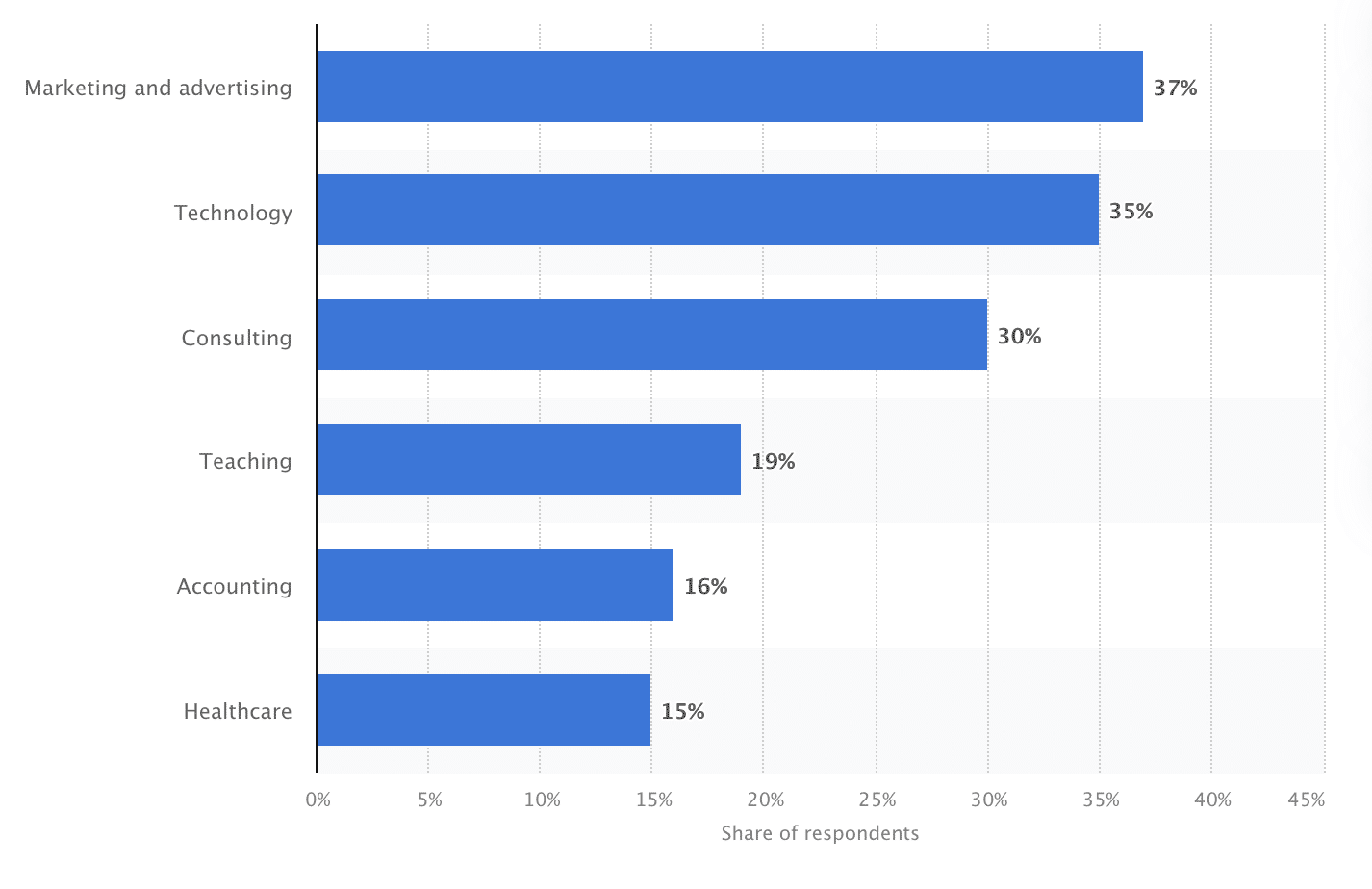
Image credit: Statista.
Generative AI in E-Commerce: Use Cases
For Product Descriptions & Content
One of the most significant uses of Generative AI in e-commerce is generating product descriptions. Natural Language Generation (NLG) algorithms
analyze product data and generate descriptions that can be used on e-commerce websites
. For example, such a tool can analyze a product's features, benefits, and specifications and generate a compelling product description that can enhance the customer experience.
One concrete example of using Generative AI for product descriptions is the platform
Phrasee
. For instance, it can analyze a product's features (of headphones for example) and generate a description like "These noise-canceling headphones feature advanced noise reduction technology that blocks out ambient noise, providing clear and immersive sound quality." It can also create
email subject lines
or
push notifications
. This approach has helped e-commerce brands save time and increase customer engagement with automated and personalized content.
Domino’s Pizza
and
eBay
are examples of using such “AI-empowered content”.
For Product Images & Ads
Generative Adversarial Networks (GANs) are another form of Generative AI being used in e-commerce,
this time to generate new product images
. By training GANs on a dataset of existing product images, the generator network can learn to
create new, realistic-looking product images that can be used for e-commerce or advertising
. This approach can save brands and merchants time and resources spent on product photography and image editing.
Image-generation tools like
DALL-E 2
are already being employed in advertising.
Heinz
, for instance, used an image of a ketchup bottle with a label resembling their own to illustrate how AI perceives ketchup. However, this was simply because the model was trained on a substantial number of Heinz ketchup bottle photos. Similarly,
Nestle
utilized an AI-enhanced version of a Vermeer painting to promote one of its yogurt brands, and
Mattel
is using the technology to generate images for toy design and marketing purposes.
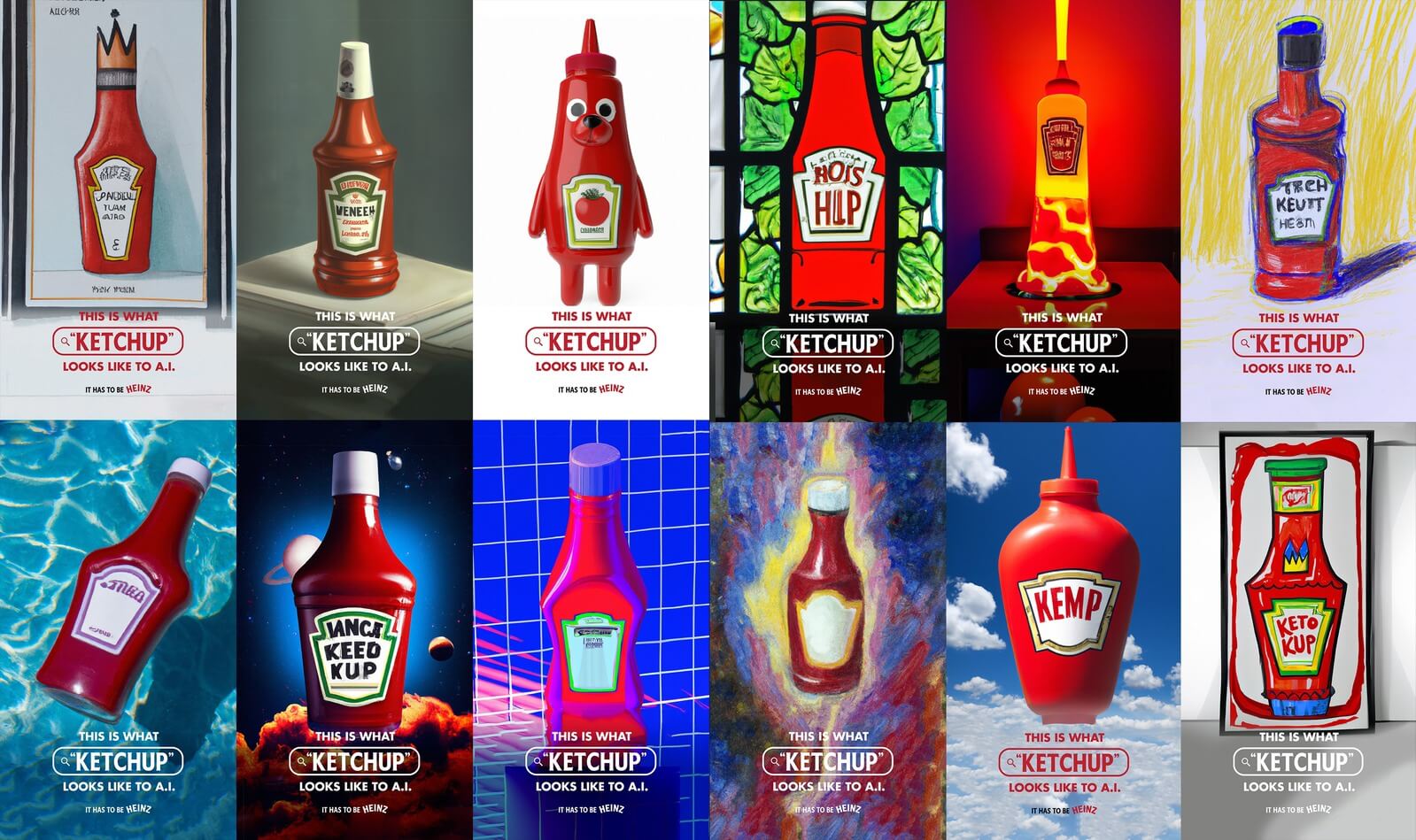
Image credit: Heinz / Rethink Canada.
For Product Recommendations
The technology can also be used to generate personalized product recommendations for customers. By analyzing customer data, such as browsing history and purchase behavior, Generative AI algorithms
can create product recommendations that are tailored to the individual customer's preferences
. This approach can help companies increase customer loyalty and drive sales.
Stitch Fix
, a San Francisco-based clothing company and online personal styling service, has disrupted the fashion retail industry. By combining the expertise of personal stylists with the efficiency of artificial intelligence, Stitch Fix delivers personalized clothing recommendations to its customers' doorsteps on a regular basis. The company's AI analyzes data on style trends, body measurements, customer feedback, and preferences to provide stylists with a curated selection of recommendations that fit their customers' lifestyle and budgets.
Similarly, generative AI can analyze vast amounts of customer data to identify patterns and trends, allowing businesses to create highly targeted marketing campaigns and personalized product suggestions.
Amazon
also uses generative AI algorithms to deliver highly personalized product recommendations that have contributed to its success. In 2021,
Forbes reported
that
35% of what consumers purchased on Amazon was a result of product recommendations
.
For New Product Design
Using Generative AI, companies can leverage GANs
to design new products based on existing ones, allowing them to quickly and efficiently create new and innovative products.
This approach can help brands stay competitive and meet customer demand for new and improved products.
Generative design
has been used in industries that prioritize both aesthetics and structural performance. For example,
New Balance
utilized generative design to create shoe sole geometries with proprietary software developed by
Nervous System
, a company based in Boston. This software enables customization of soles that cater to individual users' foot support needs and aesthetic preferences.
.png?width=64&height=64&name=Adrian%20(1).png)
Adrian Gmelch
Adrian Gmelch is Director of Content at Lengow, where he leads content strategy while staying firmly hands-on: reading the research, and tracking the trends that matter before they go mainstream.


.png)