
1. Marketplaces: the fastest route to global visibility
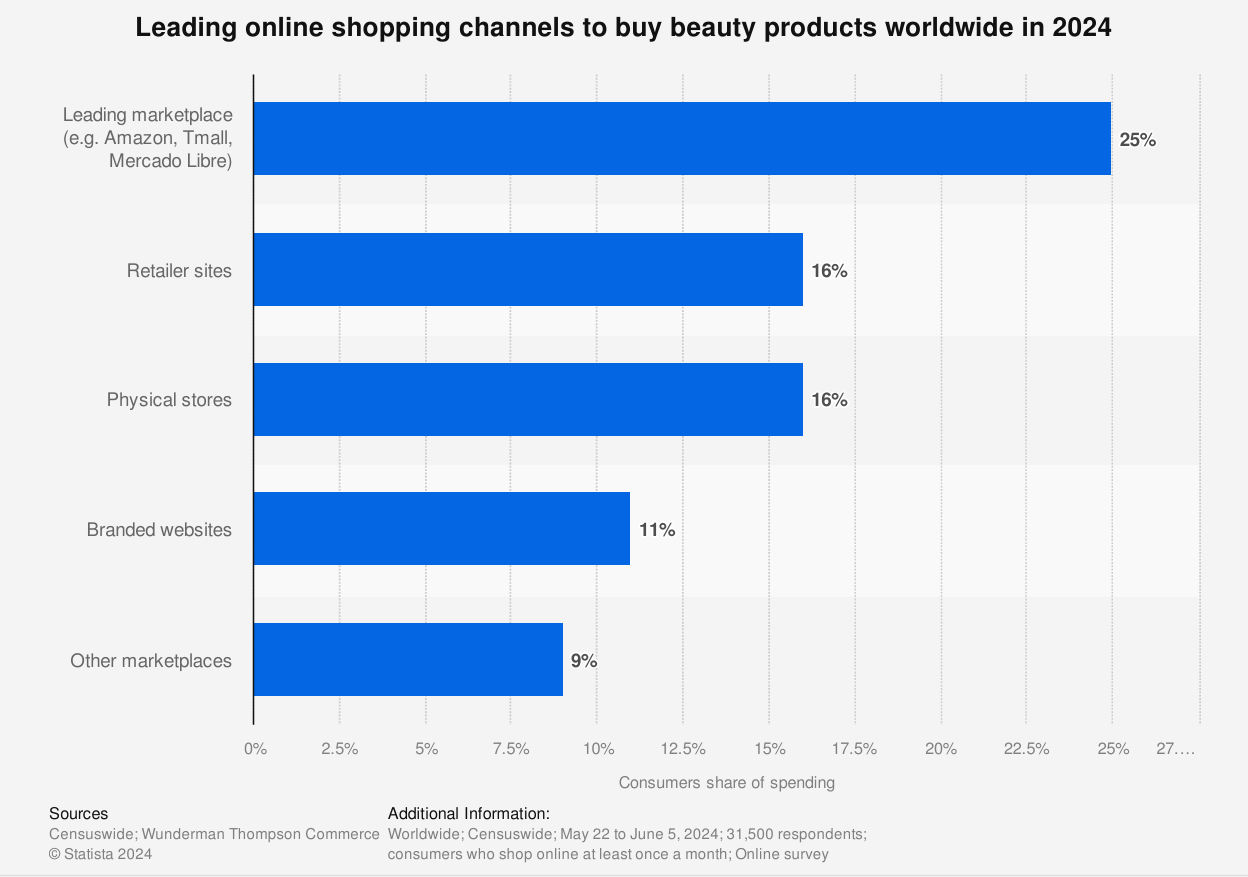
Marketplaces are now
the leading channel for online beauty purchases
, accounting for
25% of global online sales
in 2024. Platforms like Amazon, Tmall and Mercado Libre offer brands
huge exposure
, helping them reach both local and international consumers. For any beauty brand looking to scale quickly and enter new markets,
being present on marketplaces is no longer optional
— it's essential.
Managing product listings, prices and promotions across multiple marketplaces and countries can be a major challenge. That's why many leading brands rely on
NetMarkets
, which makes it easy to
manage all marketplace activity in one place
— from product listings to order and stock synchronisation — across
200+ marketplaces worldwide
. This way, brands can
maximise their visibility and global expansion
while maintaining full operational control.
2. Online retailers: protect your brand and pricing
Retailers' websites represent
16% of all beauty product purchases
, making them a key channel for reaching consumers through trusted partners like perfumeries, pharmacies, and major retail chains. But selling via retailers comes with a critical challenge:
maintaining control over pricing and brand image
, as poorly managed promotions and discounts can hurt brand perception.
To ensure consistent pricing and a strong brand presence, brands need tools to
monitor in real-time how their products are sold, at what price, and how they're displayed on retailers' websites
. With
NetRivals
, brands can conduct
in-depth competitor price monitoring and market analysis
, while
NetMonitor
allows them to
track how resellers present their products
(including prices, images, and descriptions). Together, these solutions help brands
make informed decisions, maintain strong pricing strategies, and protect their premium positioning
.
3. Physical stores: connect local inventory and online sales with Google LIA
Despite the growth of eCommerce,
physical stores still account for 16% of beauty purchases
and remain a critical part of the customer journey. Today, many brands aim to
bridge the gap between online and offline
by offering consumers a complete view of their product availability.
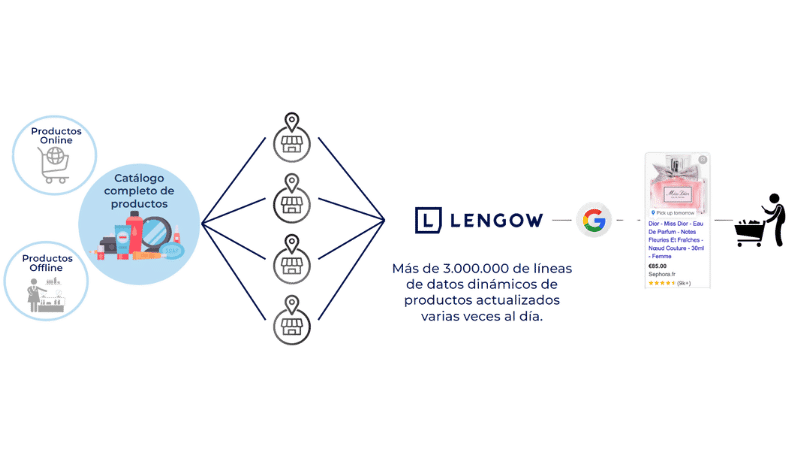
Google Local Inventory Ads (LIA)
play a key role in this, enabling brands to
show real-time stock availability, prices, and locations of nearby stores
.
Google LIA helps shoppers find the products they want,
when and where they want them
. But for this system to work, brands and retailers must keep local inventories updated in real time — and this is where
Lengow
comes in. Through
Lengow's platform
, brands can
manage and enrich product data
, ensuring that
local stock, prices, and availability by store
are always up to date.
How does it work with Lengow?
- Full product catalogue management (online and offline) via Lengow.
- Local store data: real-time updates of stock and prices for each location.
- Automatic creation of enriched product feeds for Google LIA.
- Local ads shown to consumers, highlighting nearby product availability.
This approach
enhances customer experience
and directly impacts results. For instance, a leading beauty brand working with Lengow achieved a
+30% increase in online traffic, +55% rise in in-store visits, and +20% growth in online conversions
, while reducing in-store visit costs by 20%. A perfect example of how connecting offline and online worlds
drives real sales
.
4. Brand website: strengthen your omnichannel strategy
While marketplaces and retailers dominate,
official brand websites
remain a
strategic channel for direct sales and customer loyalty
, representing
9% of beauty purchases
in 2024. But to drive traffic and sales, brands need
well-targeted and powerful advertising strategies
.
This is where
NetAmplify
makes the difference.
NetAmplify
allows brands to
automate and optimise Product Ads and omnichannel campaigns
across Google, Meta, Pinterest, and more. By leveraging real-time product catalogue data, brands can create
dynamic, high-performing ads
that reach the right consumers at the right moment — maximising
return on investment (ROI)
. And by unifying all campaigns in one strategy, brands deliver a
consistent and seamless customer experience
across all channels.
Conclusion: How to stand out in Beauty eCommerce in 2025
Success in the beauty industry requires a
well-managed multichannel strategy
:
✔️
Marketplaces to scale and reach new audiences
✔️
Retailers to protect your brand and pricing
✔️
Physical stores connected to online
✔️
Brand website powered by omnichannel advertising
At
Lengow
, we help beauty brands
manage, optimise, and grow across all key sales channels
— from a single, unified platform.
👉
Want to know how?
Book a personalised demo
.png)