

.png?width=48&height=48&name=Adrian%20(1).png)
E-commerce Growth Trajectory
Iceland's e-commerce market is poised for promising growth, with projections showing a revenue of approximately US$677.4 to US$678.4 million in 2023. The market is expected to continue expanding, with an annual growth rate (CAGR) of around 9.37% to 9.5% from 2023 to 2027, forecasting a market volume of about US$976.3 million by 2027.
A more optimistic prediction suggests a CAGR of 14.8% throughout 2022-2027. (
Source
)
Internet Penetration and Urbanization
Almost every Icelander, with an
internet penetration rate close to 99%, has access to online shopping. This widespread connectivity, coupled with the growing use of smart devices, makes online shopping increasingly accessible and convenient across both urban and remote areas.
With 94% of its population residing in urban areas, Iceland's urbanization significantly influences its e-commerce sector. Urban residents often seek convenience, a demand that online shopping fulfills well. Moreover, the dense population in these areas allows for more efficient and cost-effective delivery logistics for e-commerce businesses.
Main Players in the E-commerce Market
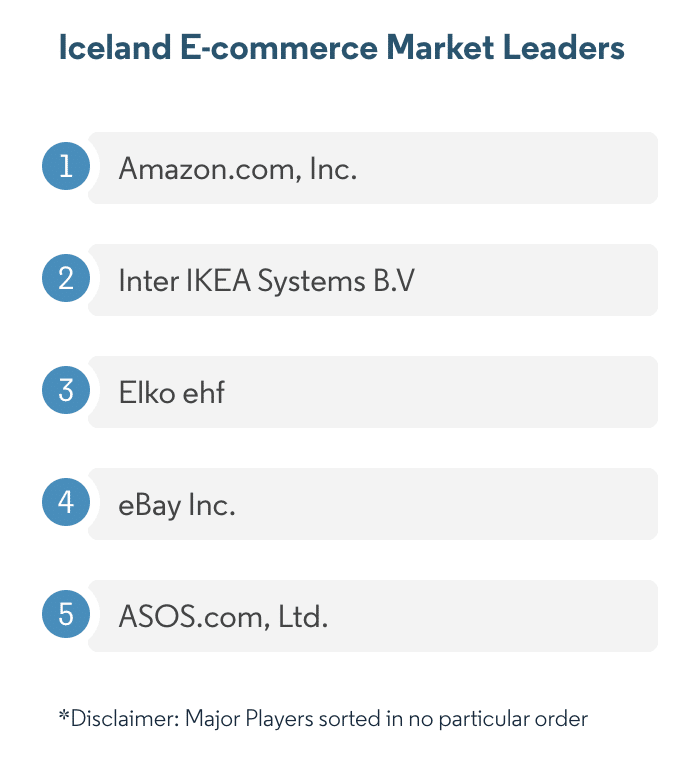
Image credit: Mordor Intelligence.
The market is populated with various players, including international giants and local enterprises. Some of the major players include Amazon, eBay, Inter IKEA Systems B.V., Elko ehf, and ASOS.com. These entities contribute to a competitive and vibrant e-commerce landscape, offering a plethora of options for Icelandic consumers.
Evolving Consumer Behaviors
Icelandic consumers have shown an increasing preference for online shopping, both locally and from abroad. The attraction towards foreign e-commerce platforms, offering a variety of low-cost products, is evident. Consumers are particularly keen on purchasing fashion-related products, baby and beauty products, and electronic equipment from American and European retailers.
Challenges
The journey is not without hurdles. High shipping costs, Value Added Tax (VAT), and handling fees imposed by local postal services are among the challenges that could potentially impede the market growth in Iceland.
Mobile Commerce on the Rise
With high mobile and internet penetration, digital wallets and mobile commerce are gaining traction. Many Icelanders prefer shopping and conducting banking activities via their smartphones, making mobile commerce a significant player in Iceland's e-commerce landscape.
Conclusion
Iceland's online shopping scene is a blend of robust growth, high internet penetration, evolving consumer behaviors, and digital marketing strategies. Although challenges like high shipping costs and tax fees pose hurdles, the country's e-commerce market continues to thrive, reflecting a positive outlook for the future.
.png?width=64&height=64&name=Adrian%20(1).png)
Adrian Gmelch
Adrian Gmelch is Director of Content at Lengow, where he leads content strategy while staying firmly hands-on: reading the research, and tracking the trends that matter before they go mainstream.


.png)