

.png?width=48&height=48&name=Adrian%20(1).png)
1/ Galeries Lafayette
Galeries Lafayette is not only France's best-known and most prestigious department store chain (founded in 1894), but also a major French marketplace. Today, the marketplace makes a significant contribution to GL.com's sales, with over 18% of the latter coming from the marketplace. It has over 330,000 active customers. Galeries Lafayette attracts a predominantly female clientele, representing 74% of its buyers. The majority of customers are aged between 25 and 45, showing a strong presence of young and mid-career consumers. In terms of spending, the average shopping basket is €105 incl. VAT. To sell on the Galeries Lafayette marketplace, it is necessary to provide all the elements relating to the product sheet, including visuals, descriptions and stock information. Sellers must also match or offer better shipping conditions than Galeries Lafayette. They must ship products to customers within 48 hours, issue an invoice in the customer's name, and manage returns and customer disputes.2/ Printemps
Since it was founded in 1865, the Printemps group has been a benchmark for French elegance, covering fields as varied as fashion, luxury, beauty and the art of living. With a network of 20 stores across France, Printemps stands out as a first-class omnichannel retailer, offering a selection of over 3,000 rigorously selected brands. More than 500 brands are already available on Printemps.com, the group's online platform. The Printemps marketplace covers a range of categories such as "Men's and Women's", "Beauty", and "Lifestyle", with a particular focus on luxury, designer and high-end brands. 70% of Printemps.com's customers are French, underlining its roots in the national market. A distinctive aspect of the Printemps marketplace is its brand selection policy. Unlike other platforms, Printemps.com focuses exclusively on the brands themselves, without including third-party distributors. This enables it to guarantee a 100% authentic offer of brands, reinforcing its commitment to excellence and quality in the world of luxury.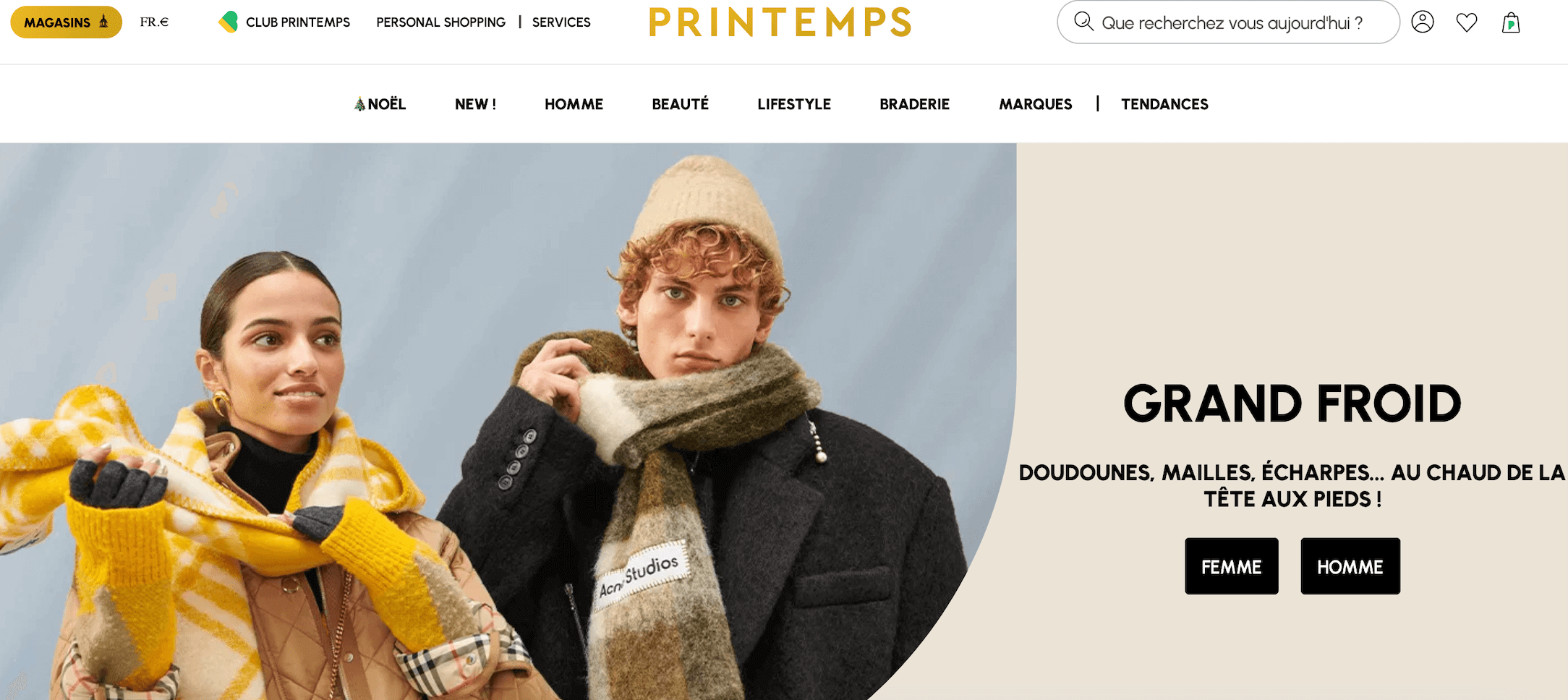
3/ Place des Tendances
Launched in 2008, Place des Tendances has quickly established itself as a vibrant and inspiring place, fostering unforgettable interactions between its designers, customers and staff. As the preferred online destination for fashion enthusiasts, Place des Tendances is positioned as the place to discover a multitude of trendy brands. As a member of the Printemps Group, Place des Tendances and its marketplace offer a number of outstanding features:- An online platform dedicated to fashion and lifestyle, bringing together over 500 varied and prestigious brands.
- A strong presence not only in France, but also internationally, with expansion into 14 countries.
- Significant appeal, as evidenced by the 34 million annual visits to the platform, reflecting its success and growing popularity.
- An impressive NPS (Net Promoter Score) of 85 out of 100, underlining excellent customer satisfaction and loyalty.
4/ Sarenza
Sarenza, another key player in luxury and fashion e-commerce, also has its own marketplace. With more than 25 million products sold and sales of 195 million euros in 2019, the platform boasts a presence in 29 European countries and a customer base of 8 million in Europe, generating more than 100 million annual visits. Sarenza's customer base is predominantly female (78%), with an average age of 38, and a high purchasing frequency, with an average basket of 80 euros and an average of 15 purchases per year. Geographically, 30% of customers are in Paris and 70% in the regions. Sarenza's business model includes a monthly subscription fee of 39 euros and a commission ranging from 15% to 20%, depending on the product category. The platform prioritizes jewelry, watches, sunglasses, shoes, bags and clothing. Sellers must follow specific guidelines, such as image orientation for shoes, and can set their own shipping cost policy while owning a European VAT number.4/ Maty
Maty, established in 1951, has become a benchmark brand in the jewelry and watchmaking sector. Its specialization in the sale of quality jewelry and watches has forged its reputation and renown throughout France. This historic brand, renowned for its expertise and commitment to quality, attracts a diverse customer base, seduced by its extensive range of products combining tradition and modernity. Maty's website, also a marketplace, is an important vector of its commercial success. Attracting over 12 million visitors a year, it testifies to the brand's continuing appeal and its successful adaptation to the digital age. This impressive traffic underlines not only the loyalty of its long-standing customer base, but also its ability to attract new customers, curious to discover its world of jewelry and watches..png?width=64&height=64&name=Adrian%20(1).png)
Adrian Gmelch
Adrian Gmelch is Director of Content at Lengow, where he leads content strategy while staying firmly hands-on: reading the research, and tracking the trends that matter before they go mainstream.


.png)