
.png?width=48&height=48&name=Adrian%20(1).png)
In-car commerce: what are the developments?
In-car commerce is a relatively new concept, and it is still being developed and tested by companies in the automotive and technology industries.
In order to be commerce-ready a vehicle must be connected. Generally speaking, this refers to a vehicle that can connect to the internet. More and more cars are being connected nowadays.
According to a McKinsey research by 2030,
nearly 95% of new automobiles sold globally will be connected, up from around 50% currently. Future innovations and improvements in in-car commerce could include some of the following:
- Development of more sophisticated in-car payment systems, such as biometric authentication and secure payment methods
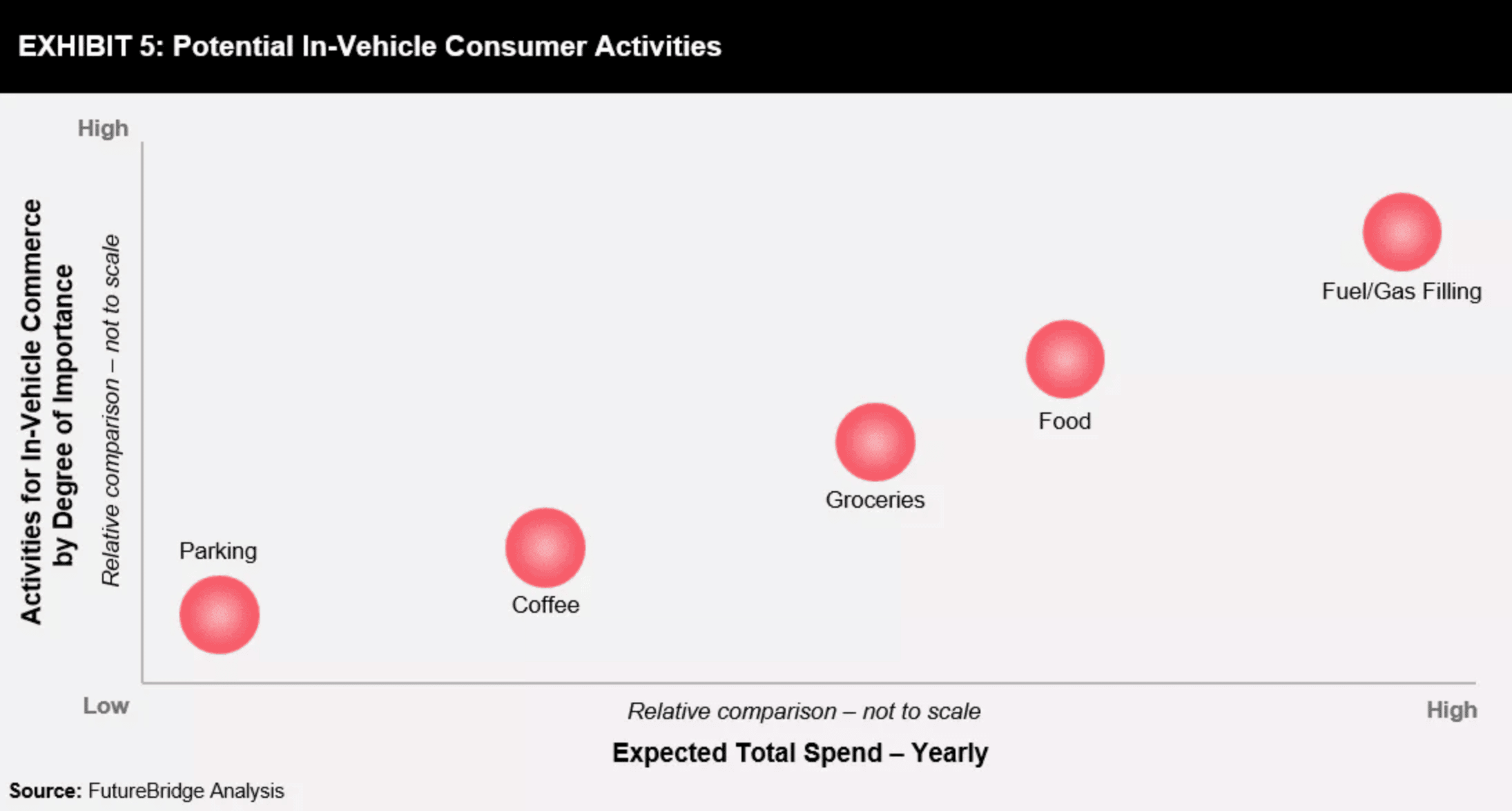
- Expansion of the range of goods and services that are available for in-car purchase, including things like groceries, fuel, and car maintenance services
- Integration of in-car commerce with other technologies, such as voice assistants and augmented reality, to make the shopping experience more seamless and convenient
- Improved integration of in-car commerce with existing payment systems, such as mobile wallet apps and online payment platforms
What are the limitations of in-car commerce?
Given that in-car commerce is a very young and fast-developing industry, it is difficult to determine with certainty what its boundaries may be.
It's still a possibility that in-vehicle commerce will not be as widely adopted as thought. This could be because the consumer experience isn't good enough and the demand from shoppers just isn't there. Moreover, there may be some restrictions or difficulties in the creation and application of in-car commerce. These issues include
security and privacy concerns, technological limitations, and regulatory hurdles. As with any online transaction, in-car commerce
raises concerns about the security of personal and financial information. Companies will need to develop secure payment systems and protect customers' data to avoid fraud and identity theft. This new commerce concept also relies on advanced technology to enable payment and delivery of goods and services.
If the technology is not reliable or efficient, it could hinder the adoption and growth of in-car commerce. Last but not least,
in-car commerce may be subject to various regulations and laws, depending on the country and region where it is being implemented. Companies may need to navigate complex legal frameworks to ensure that their in-car commerce systems comply with local regulations.
How can brands benefit from in-car commerce?
Brands can potentially benefit from in-car commerce in several ways. First of all, it offers brands the
opportunity to reach consumers in a new and potentially untapped market. By making their products and services available for in-car purchases, brands can potentially increase their sales and revenue. Furthermore, in-car commerce allows brands
to connect with customers in a more personal and convenient way. By providing services and products that are tailored to the specific needs of in-car consumers, brands can enhance their engagement with customers and
build stronger relationships. This commerce concept also opens up new opportunities for brands to explore partnerships and collaborations with other companies in the automotive and technology industries. By working together,
brands can develop innovative products and services that meet the new needs of in-car consumers.
.png?width=64&height=64&name=Adrian%20(1).png)
Adrian Gmelch
Adrian Gmelch is Director of Content at Lengow, where he leads content strategy while staying firmly hands-on: reading the research, and tracking the trends that matter before they go mainstream.
.png)