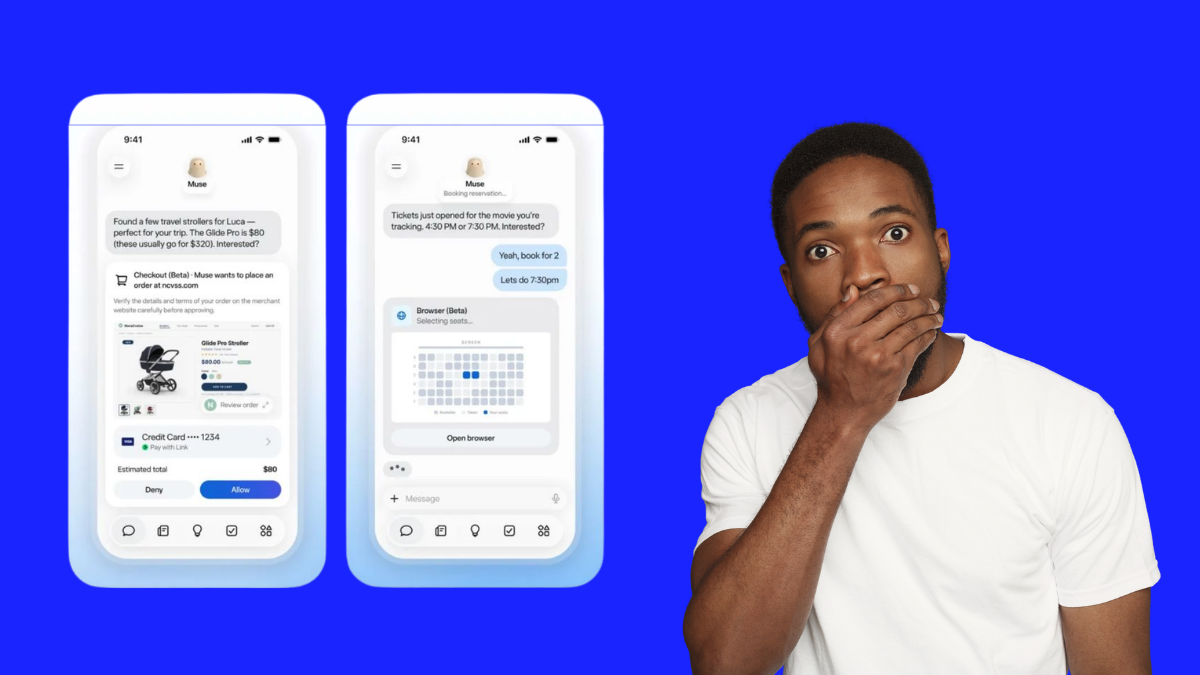

Muse, the agent that acts on the user's behalf
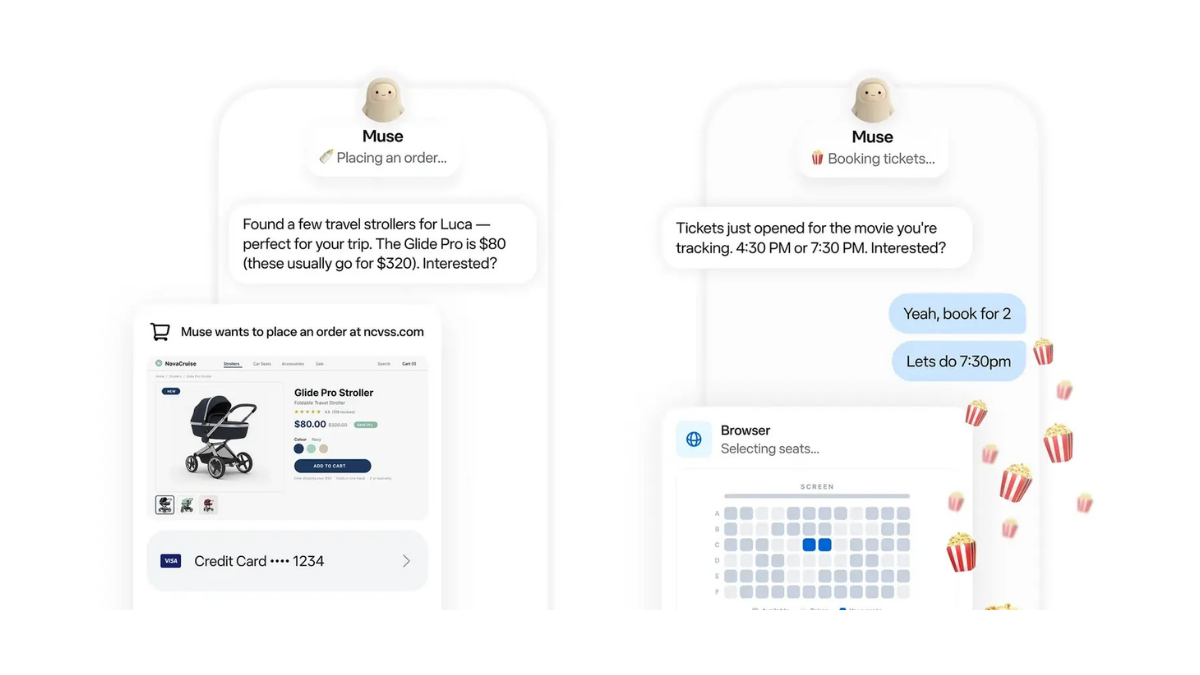
Muse has nothing to do with Meta AI, the assistant already available in Europe inside WhatsApp, Instagram and Messenger. Meta AI answers questions. Muse takes a goal, builds a plan and carries out the tasks itself: sending an email, filling in a form, booking a trip, placing an order. Meta presents it as the first personal agent built for the general public. It runs in a dedicated app, on muse.ai or directly inside WhatsApp.
The agent joins an already crowded family: the Muse Spark model, the Muse Code programming agent and the Muse Image generator, as Blog du Modérateur points out. Muse runs on Muse Spark 1.3, the latest version of the model, built for agentic tasks.
The start has been fast: Muse became the number one free iPhone app in the United States within ten days, ahead of ChatGPT, according to The Motley Fool. Basic use is free, with two plans for heavy users: Power at $20 per month and Maximum at $100 per month.
How does Muse work?
Each user gets their own virtual machine in the cloud, the Muse Secure VM. It holds a browser, personal data and the credentials of the connected services. Muse keeps working after the app is closed and comes back to the user whenever a confirmation is needed, notably before every purchase or email.
For payments, Muse goes through Link, Stripe's payment solution. For each transaction, it generates a single-use card: the real card number is never passed on to the merchant. Muse is also the first agent covered by Link's purchase protections, which cover lost or damaged parcels, refund the difference when a price drops and allow free returns. Meta states that the agent never sees passwords or payment methods, which are stored separately.
Sentinel, the agent that watches the agent
Sentinel is a second agent running on the same virtual machine, isolated from Muse. Nothing Muse does reaches the internet without its approval, and it asks the user whenever it sees fit.
L'Usine Digitale points out the paradox: you take an agent so you no longer have to supervise every action, and Meta gives it a supervisor. Given the context, the choice makes sense. KultureGeek reports that Meta employees flagged repeated disconnections and one case of private photos being exposed despite the safeguards. Meta also admits it pushed back a launch planned for April to strengthen security.
Amazon says no, Shopify says yes
On the evening of September 20, Amazon started blocking Muse. An agent trying to buy on the site gets a message saying that an unauthorized AI agent violates the terms of use. Amazon blames Meta for not warning it and for not identifying the agent while it browses. It had asked Meta to remove its site from the Muse experience, which Meta refused, according to Bloomberg. There is also a financial reason: Amazon made more than $68 billion in advertising revenue last year, and an agent that buys in place of a human sees no sponsored product.
The next day, Shopify CEO Tobi Lütke announced a partnership so that Muse can check out with Shop Pay across all Shopify stores. The result: +7% on the stock market on Monday, +7% on Tuesday. For Shopify, the deal is simple: every Muse order goes through Shopify Payments, which takes its fees like on any other sale.
This American signal is far from trivial. In 48 hours, the country's two biggest e-commerce infrastructures took opposite positions on the same agent.
ChatGPT and Google in the rearview mirror
In March 2026, OpenAI abandoned Instant Checkout, the direct purchase feature in ChatGPT, after a conversion rate below 1% against 3 to 4% on average in the industry, according to Shopifreaks. ChatGPT now focuses on product discovery. On Google's side, buying in AI Mode depends on a protocol that merchants have to integrate.
These tools come in before the decision: they help compare, qualify a need, make a choice. Muse starts from a request that has already been made. When the user writes "find me this and order it," the purchase intent is already there. The agent's job is to turn it into a sale. And since it browses sites like a human, it needs no integration from the merchant. That is exactly what Amazon objects to.
What this means for merchants
The product page is read by a machine. Muse reads the page in a browser. A price that differs between the feed and the page, a poorly filled variant or shipping costs hidden until the last moment are enough to make the order fail.
Price gaps stand out. An agent that compares several sites before buying has no loyalty to any retailer, and Link's protection even refunds a price drop after the purchase.
Checkout matters as much as visibility. Shopify is announcing a direct route with Shop Pay. The others will depend on the agent's ability to get through their checkout flow.
Muse is available in the United States and Canada on iOS, Android, muse.ai and WhatsApp. Meta has given no date for Europe. Since September 29, a Muse for Small Business version also lets users connect Shopify, Klaviyo or Stripe to run a small business.

Alexis Merelle
Alexis Mérelle works on content and SEO at Lengow, where he turns marketplace and pricing data into articles, and tracks what AI search is doing to product discovery.
.png)