

.png?width=48&height=48&name=Adrian%20(1).png)
Defining Key Performance Indicators
In the realm of business, Key Performance Indicators (KPIs) are quantifiable measures used to evaluate the success of an organization, an employee, or a specific project or campaign in achieving key objectives. With the unprecedented growth of online marketplaces, KPIs have become an indispensable tool for brands and sellers in monitoring performance, identifying areas for improvement, and making data-driven decisions. For sellers operating within marketplaces, a myriad of KPIs — encompassing aspects such as sales volume and customer satisfaction — might be pertinent. However, the KPIs of prime importance are intrinsically linked to the unique goals and objectives that each seller establishes for their specific marketplace presence (for example Amazon, eBay, Zalando, etc.). If you're just dipping your toes into the world of marketplace selling, the task of determining which KPIs to track can be somewhat overwhelming. To facilitate a smoother path forward, we've curated a list of the key KPIs you ought to be monitoring in 2023.
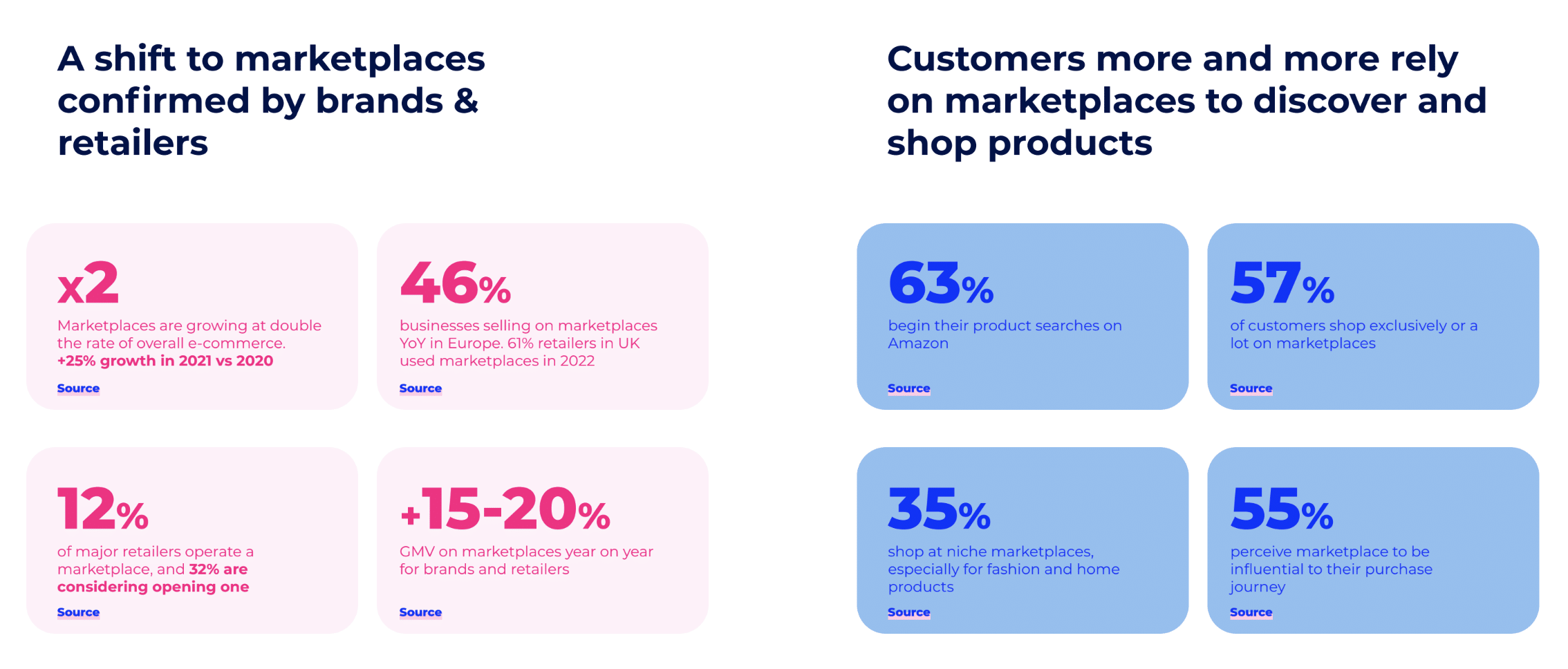
Key Marketplace Figures That Show How Important the Right Monitoring Is (source: Skill-up Ebook How to Maximise Revenue on Marketplaces).
Key Marketplace KPIs
The Most Important KPIs for Marketplaces
These represent the critical marketplace KPIs that should be an integral part of any comprehensive marketplace performance strategy:
- Number of Orders: This KPI monitors the total number of orders placed on your active marketplaces within a set period. It's an excellent indicator of marketplace activity and demand for your products.
- Gross Merchandise Value (GMV): GMV calculates the total value of merchandise sold over a specific time frame. It provides a snapshot of the sellers's scale on a marketplace.
- Turnover: This reflects your total sales over a given period, highlighting the financial health of your active marketplaces and your growth potential.
- ROI by Marketplace: Measuring the Return on Investment (ROI) per marketplace aids in understanding which platforms offer the best returns and deserve further investment.
- Profit Margin Per Marketplace: This crucial KPI measures the net profit for each sale made on a particular marketplace after accounting for costs. These costs can include the subscription fee, product category commission, and logistical expenses.
- Average Basket Size: Similar to Average Order Value (AOV), this measures the average number of items per order. It's vital for understanding buying habits and developing cross-selling and up-selling strategies.
- Best-Selling Products: Identifying your top-selling products per marketplace helps to understand customer preferences and trends, aiding in inventory management and product development.
- Best Performing Countries: Tracking sales by marketplace geography can highlight which countries are most lucrative for your active marketplaces and where you might want to target your marketing efforts.
- Product Categories Performance: Understanding which product categories perform best on marketplaces can guide your inventory management and dictate which categories to expand or contract.
Further Marketplace KPIs to Consider
While the aforementioned KPIs are crucial to tracking your marketplace performance, there are additional metrics that offer valuable insights:
- Sales Volume: The most fundamental KPI, sales volume indicates the total number of products sold within a specific period. Tracking sales volume aids in understanding seasonal trends and planning inventory.
- Seller Response Time: It's the average time sellers take to respond to customer queries or complaints on marketplaces. The quicker the response time, the better the customer experience.
- Customer Satisfaction Score (CSAT): A direct line to your customer's thoughts, this score shows how satisfied customers are with your product or service. It can be collected through post-purchase surveys.
- Return Rate: The percentage of purchased products that customers return per marketplace. High return rates can often signal issues with product quality or descriptions.
- Conversion Rate: This is the percentage of site visitors who complete a desired action, such as making a purchase. It's crucial for understanding the effectiveness of your site design and marketing strategies.
- Churn Rate: This measures the number of customers or subscribers who cut ties with your service during a given period. It's key for understanding customer retention and loyalty.
- Retention Rate: The flip side of churn, this KPI indicates the percentage of customers who continue to buy over a given period.
The Power of a Comprehensive Marketplace KPI Dashboard
While it's feasible to track marketplace KPIs individually through your seller account on each platform, this can quickly become overwhelming and complex. Envision instead the power of centralizing all your KPI monitoring! Having a single location for all your KPIs from various marketplaces not only streamlines your profitability analysis but also illuminates potential expansion opportunities into new marketplaces or geographies. A comprehensive KPI dashboard holds the key to this level of consolidated oversight and beyond - feed management platforms like Lengow provide it! A well-crafted dashboard should not only display your KPIs in a digestible, visual format but also be interactive, allowing you to drill down into each metric and analyze trends over different periods. You should also be able to compare data across various categories, such as product types, countries, and marketplaces. This granular view of your performance can guide strategic decision-making and resource allocation .
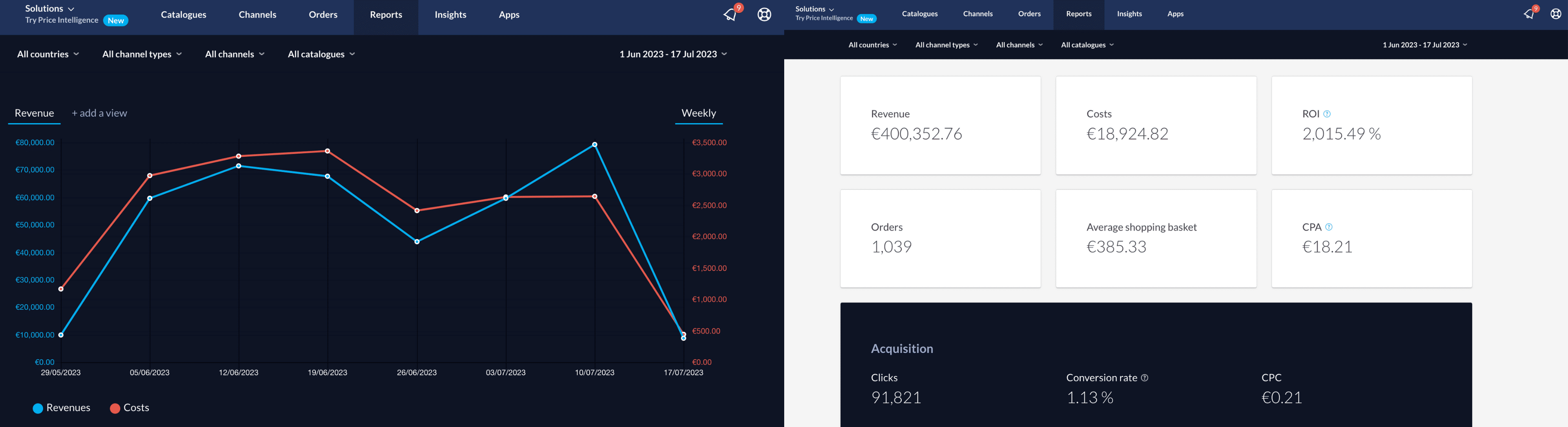
Examples of Marketplace KPI dashboards on the Lengow platform (source: Lengow).
It's important to remember that KPIs are not just about tracking successes—they're also about learning from challenges. Evaluating collected data, reviews, and feedback is a non-negotiable part of the process . These valuable insights will help you improve your delivery service, enhance content, and devise effective advertising campaigns on marketplaces. With a comprehensive understanding of your performance, you might be ready to take the next step. Start experimenting with new products and marketplaces . Initial experience and a satisfactory performance record are all the encouragement you need to test new product categories, opening up new avenues of growth . In essence, these metrics are your roadmap to optimizing your distribution and adapting your marketplace strategy . They provide a clear vision of where you're currently standing and how you can reach your destination faster and more efficiently. Remember, a well-crafted KPI dashboard is not a luxury—it's a necessity in the digital age. It's your compass in the complex and ever-changing landscape of online marketplaces. Use it well, and it will guide you to success.
Monitor Your Marketplace KPIs Now
Marketplace KPIs FAQ
What is a KPI in online marketplaces? Answer: A KPI, or Key Performance Indicator, in online marketplaces is a quantifiable measure that helps brands or sellers evaluate their success in meeting their key objectives. Why are KPIs important for online marketplaces? Answer: KPIs are important for online marketplaces as they help to monitor performance, identify areas for improvement, and guide data-driven decision-making. How often should I review my marketplace KPIs? Answer: The frequency of review will depend on the specific KPI and the dynamics of your active marketplaces. Some KPIs might need daily monitoring, while others could be reviewed weekly or monthly..png?width=64&height=64&name=Adrian%20(1).png)
Adrian Gmelch
Adrian Gmelch is Director of Content at Lengow, where he leads content strategy while staying firmly hands-on: reading the research, and tracking the trends that matter before they go mainstream.


.png)