Send quality, enriched product information
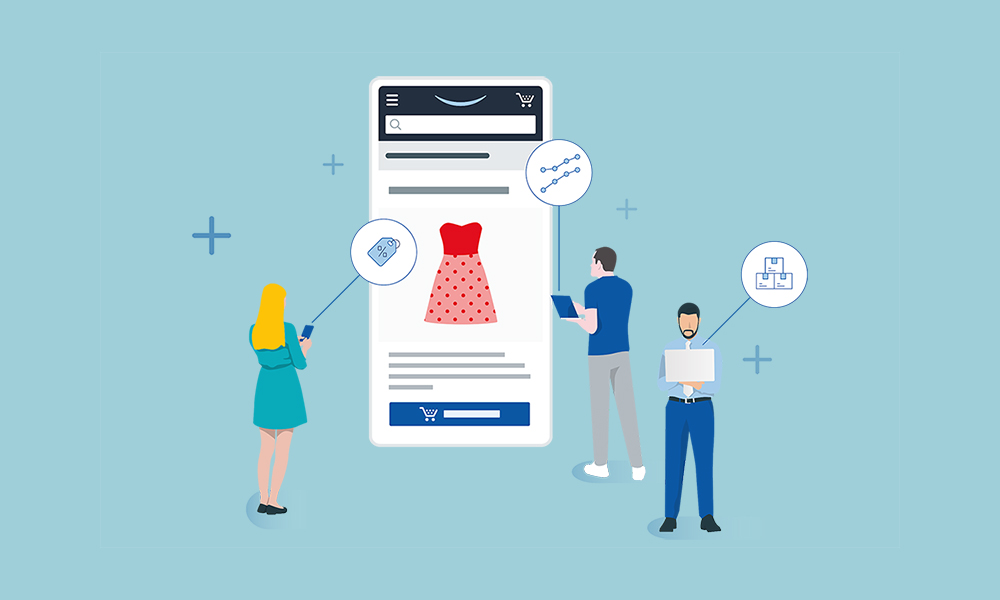
Direct-to-Consumer sales are attracting more and more brands which seek better control of their business. In addition to managing their brand image and pricing, this strategy allows players to select the channels on which they wish to sell their products. After having developed their e-commerce site, many brands turn to new acquisition channels such as social networks, marketplaces or Google's search engine. Product data is sent to each channel and must be continuously updated and
enriched to ensure an optimal shopping experience for buyers. To quickly and easily enter your product data on new channels, our platform guides you when setting up your attributes according to each distributor. These attributes can be mandatory (titles, descriptions, images, prices, etc.) or optional. In addition to ensuring the publication of your products, these attributes also contribute to the enrichment of your product data and increase your visibility on marketing channels. Once your catalogue has been sent, go to your
diffusion reports to check the shipping status of your products and make the necessary corrections to your products with errors in just a few clicks to put them back on sale quickly. Diffusion reports provide better readability and understanding of the errors sent by marketplaces.
Leverage your data to improve performance
There is a double advantage to the
D2C model: you not only master your brand’s data, but you also have a 360° vision of your customers after having built a direct relationship with them. To strengthen the control of your data and deepen your knowledge of your customers, equip yourself with the right tools to make the best strategic choices. You’ll find the
Lengow application for Google Analytics available within our "Additional Sources". This application allows you to enrich your product catalogue with statistical information from your e-commerce store, helping to guide your decision-making. To access this application, you just need to connect your
Google Analytics account to Lengow. Then, use macro traffic trends and sales from your e-commerce site to strategically configure your catalogue and ensure maximum sales. For example, you may decide to test a part of your catalogue before you launch your business completely on a marketplace. Start by sending the top 50 of your most profitable products based on the revenues of the last 7 days.
Align your messages and products
Whether selling on
Instagram or
Pinterest, it is important to keep a certain consistency between the organic messages you publish on your brand page and the Shopping ads displayed to users on these social platforms. To ensure your ads echo your posts, segment your product catalogue using our feature "Segments". For example, you can send only specific product lines or products around which you have built a strong experience.
Synchronise your stocks to sell on marketplaces
When you sell your products on multiple marketplaces,
stock management can quickly become more complex as you need to ensure your stock is updated online daily. To avoid any frustration among your customers, Lengow gives allows you to connect your (e)commerce solution (
Shopify,
WooCommerce,
PrestaShop,
Magento, etc.) to synchronise stock information between your online store and marketplaces. If you wish to outsource your logistics, turn to
marketplace shipping services that are compatible with our platform:
Fulfilment by Amazon (FBA), Cdiscount Fulfilment and Mano Fulfillment (in France).
Naomi Botting
Table of content
Is your catalogue ready for AI Shopping?
Discover what AI assistants look for, how products get selected and what you can do now to stay visible in the new shopping journey.
.png)