
.png?width=48&height=48&name=Adrian%20(1).png)
What actually changes?
Here's the clearest distinction:
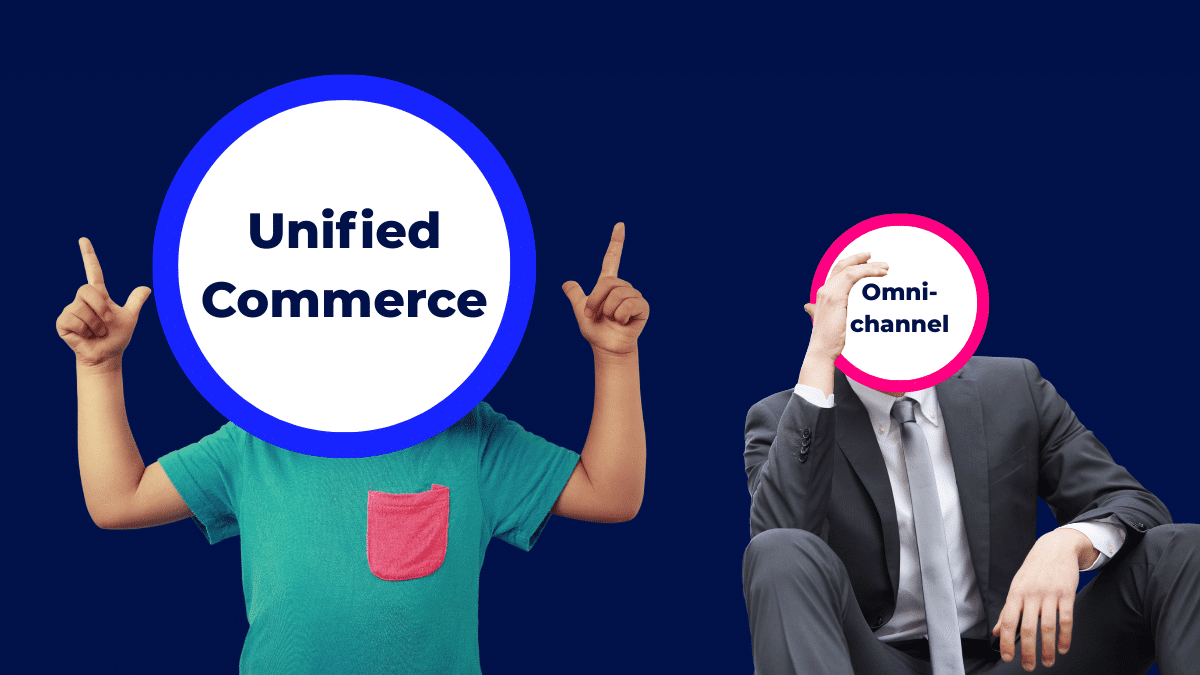
- Omnichannel is about customer experience across touchpoints.
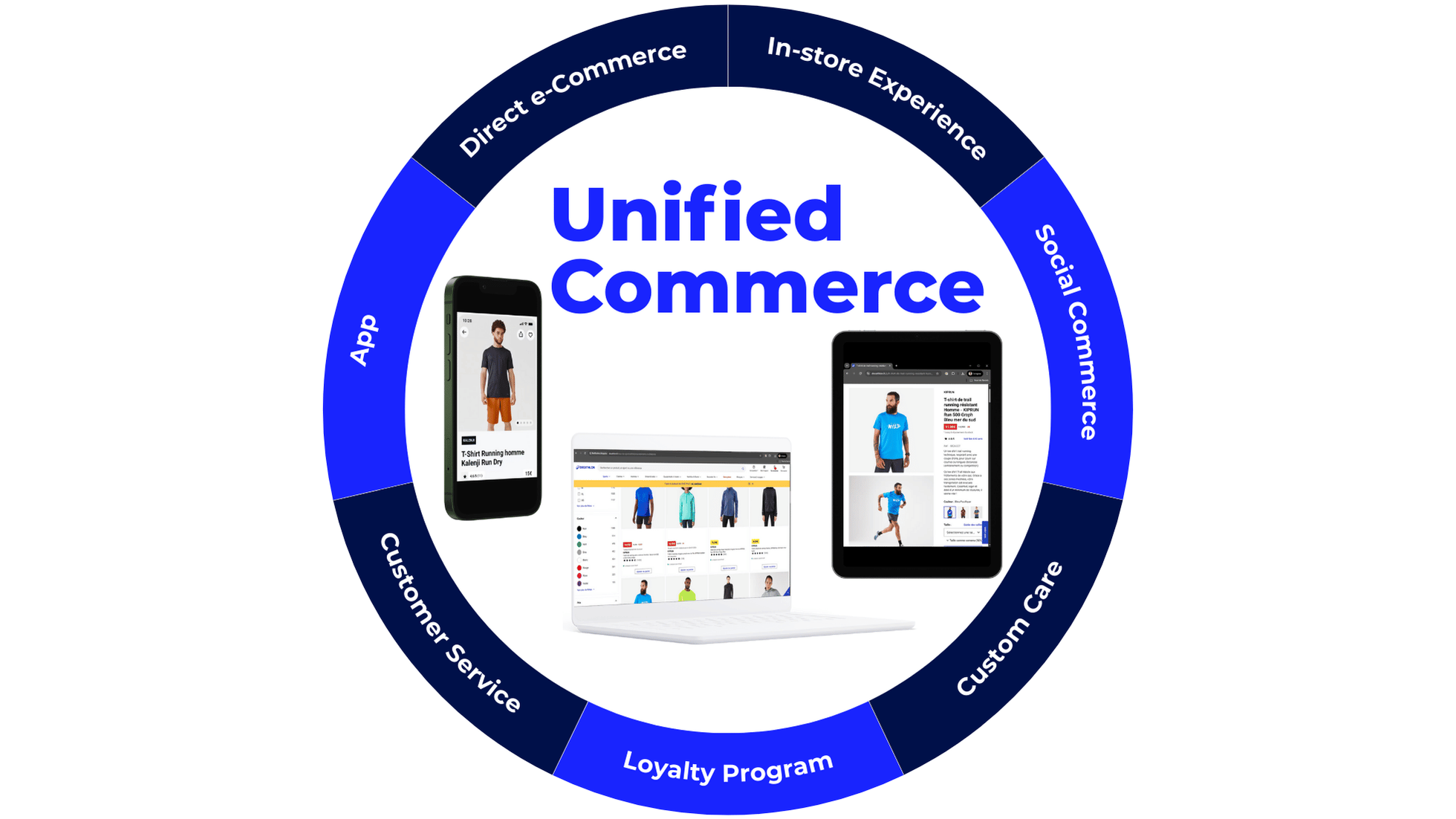
- Unified Commerce is about the business running as one engine across those touchpoints.
- Product data (titles, attributes, categories, identifiers)
- Inventory visibility (what's truly available, and where)
- Order orchestration (how orders route to the right node)
- Service logic (returns, exchanges, pickup rules)
- Performance measurement (so teams don't optimize in silos)
Why now?
If Unified Commerce feels like the buzzword of the day, the pressure behind it is real.
Channels are multiplying faster than operations can handle
Brands aren't just selling on "the website" anymore. They're across marketplaces, social commerce, retail media, affiliate ecosystems, and physical stores acting more like fulfillment nodes than points of sale.
Each new channel brings different requirements: attributes, formats, constraints, update rhythms. Without unification, every channel becomes a custom project. Growth turns into permanent backlog.
The cost of getting it wrong has skyrocketed
A decade ago, a messy product listing was an inconvenience. Today it's lost conversion, customer frustration, and wasted spend. When inventory and order logic are fragmented, small mistakes compound fast:
- Overselling and cancellations
- Delayed shipments and broken promises
- Avoidable returns
- Support costs and brand damage
When it works
Good Unified Commerce is rarely visible because nothing feels "stitched together." It just works.
Customers experience it as confidence:
- "If it says in stock, it's in stock."
- "If pickup is ready soon, it actually is."
- "If I return in-store, they see my order."
- "If I shop on a marketplace, it still feels like the brand."
- Fewer manual fixes
- Fewer duplicate workflows per channel
- Faster launches into new markets
- Quicker catalog and pricing updates
Three real examples
Nike: Same-day pickup with clear expectations
Nike offers same-day pickup for eligible products at participating stores when items are in stock locally, with orders typically ready within hours. That simple promise sits on a unified, real-time inventory layer connecting stores, e-commerce, curbside pickup, and mobile checkout, all reading from the same stock data.
Zara: Store Mode with a two-hour promise
Zara's Store Mode lets customers browse and order from a specific store's live catalog, then pick up their order within 120 minutes via Click and Go. The same mode powers a "Find items in store" feature using the same availability data. This requires tight alignment between store stock, digital ordering, and store operations so the two-hour promise holds in real life.
Decathlon: Infinite aisle turning stores into hubs
Decathlon's "infinite aisle" model lets store staff sell from a digital assortment of 15,000+ SKUs, not just what's on shelves, using one app connecting e-commerce and forty+ physical stores. When an item is unavailable in-store, associates check stock across warehouses and other locations, place the order, and offer home delivery or click & collect. In some stores, these orders already represent up to 5% of physical store sales.
The uncomfortable truth
Many Unified Commerce initiatives stall because teams treat it like a platform decision rather than an operating model.
Common dead ends:
- "Let's replatform and it will all be unified."
- "We need perfect data before we start."
- "We unified inventory, so we're done."
- Pick the outcomes (fewer cancellations, faster channel launch, higher conversion, lower ops cost)
- Unify critical data (product identifiers/attributes, availability signals, pricing logic)
- Orchestrate execution (so every channel isn't a snowflake)
- Create a feedback loop (performance → action → updated execution)
Where Lengow fits
Unified Commerce lives or dies in the messy middle: the space between internal "source of truth" and external channels where demand happens.
Even with strong core systems, external channels demand very specific things: different taxonomies, attribute requirements, formatting rules, update frequency expectations.
This is where Lengow plays a clear role: channel execution. Turning product data into channel-ready listings and keeping them consistent at scale.
Lengow enables catalog imports in multiple formats (CSV, XML, JSON, API), with tools to clean, standardize, enrich, and merge data sources for optimized, channel-ready listings. Changes to pricing, stock, or product information update in real time across channels, without developer input for every change.
In Unified Commerce terms, that matters for three reasons:
1) Consistency without freezing the business
Unified Commerce demands consistency, but commerce demands speed. When teams manage feeds channel-by-channel, consistency becomes fragile and slow. Automating transformations keeps execution coherent even as catalogs change daily.2) Scale without multiplying complexity
As marketplaces and partner channels multiply, "new channel" shouldn't mean "new manual process." Lengow helps teams manage and distribute feeds across marketplaces and advertising channels from one place.3) A tighter loop between intent and reality
When attributes, pricing logic, and availability update faster across channels, the brand's "truth" executes everywhere with fewer delays and contradictions. Lengow isn't the whole Unified Commerce story; no single tool is. But it's one brick that prevents Unified Commerce from becoming a purely internal ideal while external channels run on exceptions.A Quick Maturity Check
Five questions to run internally:
- Can we trust the same product information across web, marketplaces, and stores?
- Can we update availability and pricing quickly enough to avoid costly mismatches?
- Does launching a new channel feel repeatable—or like a custom project?
- Do customer-facing teams and operations see the same order reality?
- Are we scaling new revenue—or scaling manual work?
Final Thought
If omnichannel was the promise, Unified Commerce is the commitment to make it operational.
It's catching on because it matches how customers already behave: they don't navigate channels, they navigate life. The retailers and brands that win will be the ones whose systems stop arguing with each other long enough to deliver one consistent reality.
.png?width=64&height=64&name=Adrian%20(1).png)
Adrian Gmelch
Adrian Gmelch is Director of Content at Lengow, where he leads content strategy while staying firmly hands-on: reading the research, and tracking the trends that matter before they go mainstream.

.png)