What is Weibo?
Chinese for ‘microblog’, Weibo (新浪微博) was initially considered China’s answer to Twitter, being originally limited to 140 characters. Weibo now allows users to post a wide range of media, along with long-form posts (>2000 characters).
211 million daily active users connect to the platform to upload are share content with subscribers, including posts, photos, videos and ‘Weibo Stories’. Users watch live-streams and vlogs and interact via chat or by posting comments and ‘liking posts’.
93% of Weibo’s user base connect via mobile.
China’s “digital generation” (>30-year-olds) make up 50% of Weibo’s user base, meaning
Weibo is an essential platform for marketers seeking to promote their brand and products to China’s younger generation. Not simply a social platform, Weibo is also a key e-commerce platform in China, allowing users to shop brand and retailers' 'Weibo Windows'. In 2018, Weibo announced an
investment of 2 billion yuan ($290 million) to support content-driven e-commerce over the coming years in a bid to cater to this tech-savvy demographic.
Weibo Window
In 2015, Weibo partenered with Chinese marketplaces Taobao.com, VIP.com and Jumei.com, etc. to open as an e-commerce platform.
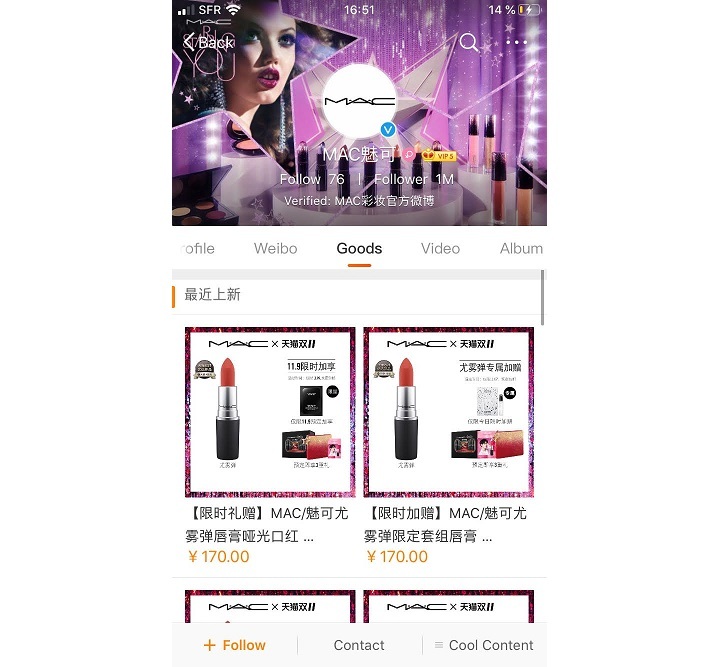
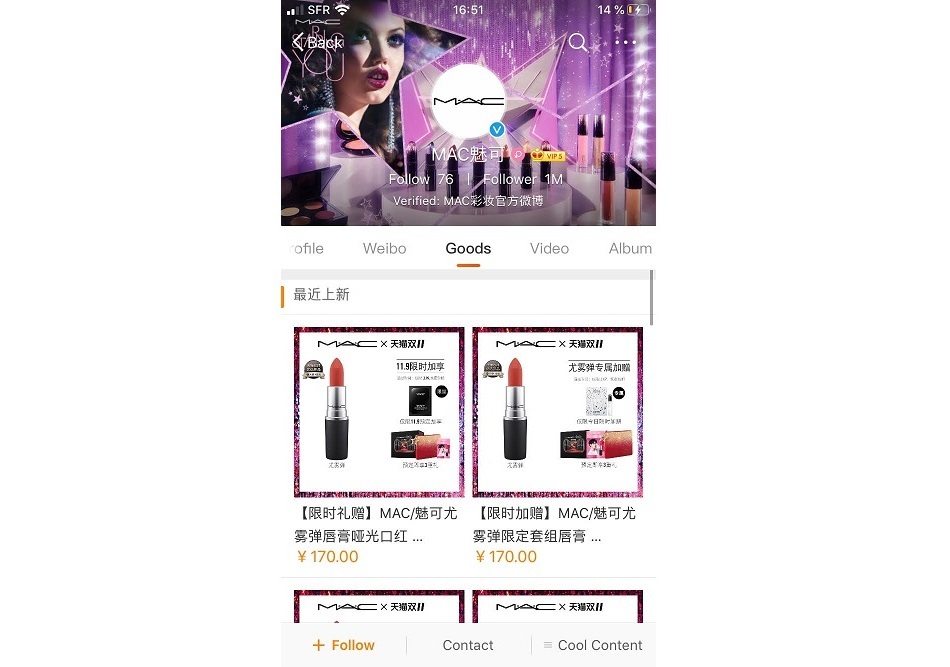
‘Weibo Window’ is a function allowing brands to upload products from their catalogue to their page. Sellers can manage and track revenue through the platform. Converting a brand's Weibo fans into actual customers via shoppable posts (indicated via a blue bag icon), users are redirected to either a product page on a marketplace, or can directly purchase the products without leaving the Weibo app, paying via Alipay (typically already linked to users' Weibo accounts).
Market your products on Weibo
To get started marketing on Weibo, register and verify your official account to receive a blue ‘V’ tag, letting consumers know your page is reliable. Your account will be given access to:
- comprehensive marketing tools,
- accurate data analysis services,
- efficient communications management systems.
Advertising formats
Search engine advertising
Weibo’s ‘Discover’ page allows users to explore the platform and showcases trending posts and ‘hot topics’.
The ‘Search Bar Promotion’ function allows brands to buy a keyword and feature as the top listed result, boosting visibility and raising brand awareness and increasing its follower base.
Retailers can also buy ‘hot topics’ and get listed as third place on the ‘hot topic’ list, a powerful way to create a buzz around a new product.
Exposure advertisement
To increase exposure, Weibo features
cost-per-click advertisements, in the format of
in-app banners and pop-up ads displayed when a user opens the app. This is an extremely effective way to increase brand visibility on the Weibo.
To increase user engagement or to redirect users to a product page, marketets can place a call-to-action in Weibo's CPC advertisements.
Newsfeed advertisements
Brands can place promoted posts with call-to-actions within newsfeeds to achieve specific goals, such as fostering app installations, encouraging users to make a purchase or to join a challenge. Unlike in the West,
these types of advertisements are not considered as spam by Chinese consumers, making newsfeed advertisements an effective way to boost brand awareness.
Boost your posts with 'superfans'
Weibo allows you to raise your brand’s awareness through both
Super Fans Tunnel and
Super Fans Headline. The
Super Fans Tunnel allows brands to pay to reach a wide audience outside their follower base. It
works by displaying your post as a ‘headline’ on top of your targetted audience’s news feed. You can select your targetted audience based on their age, region, selected interests, etc.
The Super Fans Headline works in the same way, however, targets a brand’s existing followers, with the aim to increase follower engagement.
Use KOLs to boost your marketing efforts
Influencers are known as
Key Opinion Leaders (KOLs) in China. Made up of celebrities, internet stars and bloggers, KOLs are highly instrumental in increasing brand exposure and driving sales via social marketing campaigns. Brands pay KOLs and celebrities to distribute discount codes and share product introductions via live-stream and social recommendation vlogs on Weibo.
Estée Lauder launched their new 'Double Wear' foundation, inviting KOLs to participate in a challenge on Weibo to demonstrate the product's longevity. KOL YuYu's memorable and entertaining video received an impressive
5.7 million views in total and demonstrated the quality of the product. While it's key to everage the right KOLs that will inspire and impact sales within your targeted audience, KOL marketing is an extremely effective tool in China.
Data from PARKLU suggests that an impressive 1.5% of consumers make a purchase immediately after KOLs post about products on Weibo!
Weibo Stories
Similar to Instagram stories, Weibo users can share a 15-second photo or short video with followers, which disappears after 24 hours. Users can apply filters, geotags, text and hashtags, and the story can be saved to an album on the user's profile. KOLs and celebrities use the Weibo story function to share updates about their daily lives and, key for brands, promote, recommend and review products. Since this appears less like a commercial, coming from a ‘trusted source’ or an ‘expert’, followers are more likely to make a purchase than with a regular ad.
.png)