

.png?width=48&height=48&name=Adrian%20(1).png)
1/ Choose Keywords Carefully
When it comes to optimising product titles for search engines or marketplaces, it is important to choose keywords carefully. Think of the words that customers might use when searching for your product. A keyword analysis tool can also help to find out which words customers use when searching for specific products. Try to include specific details and features of your product that make it stand out from the competition. Include industry-related keywords to make it easier for customers to find your product. Be mindful of using lengthy phrases or words that may confuse search engines, as it can negatively impact your search engine optimisation. Align product titles with potential customers' search results, as shoppers typically only spend 2-3 seconds scanning a title. If it does not meet their needs, they will move on.
2/ Include Relevant Descriptive Information
Crafting product titles that include relevant and descriptive information is crucial for helping search engines understand what your product is and how it should be ranked. To optimise your product titles, here are some key considerations:
- Use keywords that accurately describe your product, such as its name, category, color, size, and other relevant attributes.
- Include specific details that can help users find what they’re looking for, such as brand names, material types, or product features.
- Keep titles concise, but also include enough information to make them descriptive.
- Use words that are commonly used in searches for your product, such as synonyms and related terms.
- Avoid using excessive punctuation or special characters, as they can interfere with search engine optimization.
3/ Utilise Long Tail Keywords
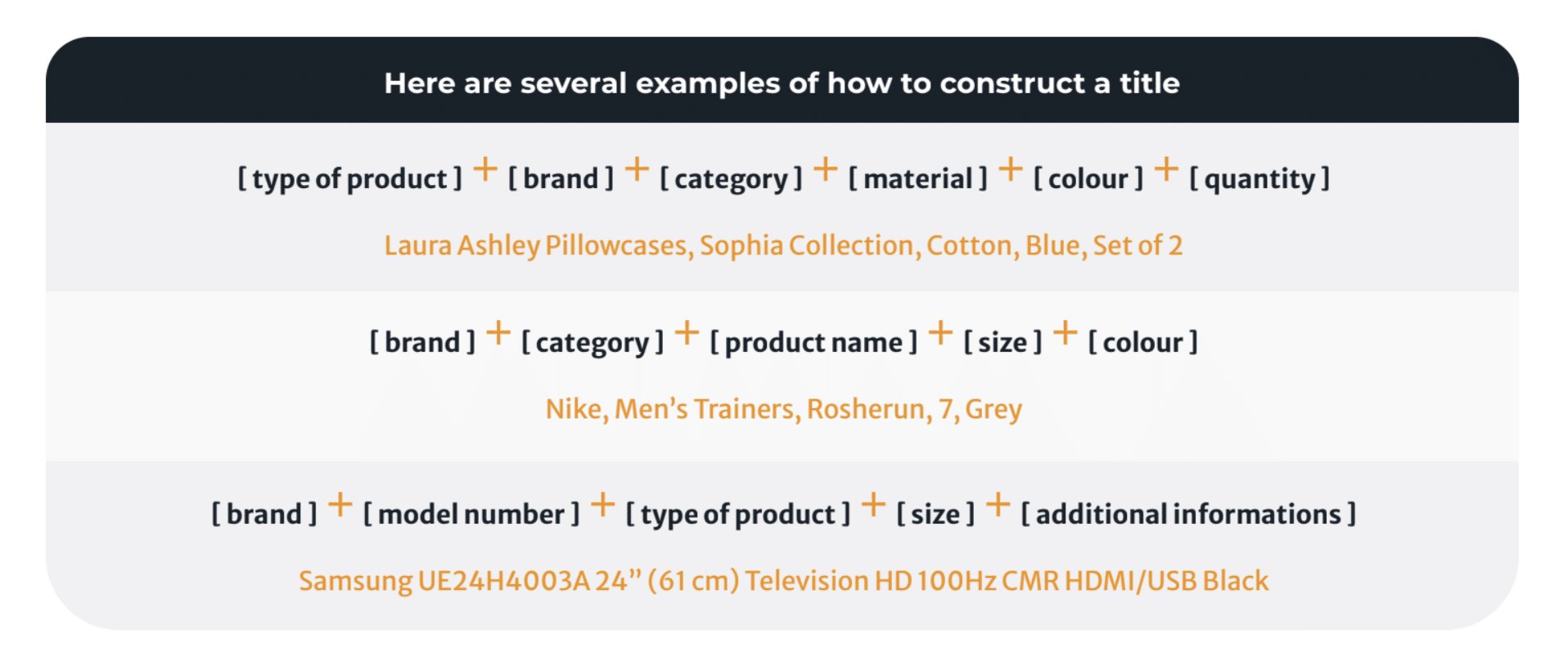
Long tail keywords are longer, more specific phrases which are used to target a narrower group of users. They often consist of four or more words and are used by users who already know what they’re looking for. Utilising long tail keywords in your product titles can be beneficial in helping you to reach a more targeted audience and increase the chances of a successful search engine result. For example, a product title such as “Women’s Black Leather Shoes” is more specific and more likely to be successful than simply “Women’s Shoes”. Incorporating long tail keywords into your product titles can help you to reach the right customers. It's interesting to note that only 20% of searches on Amazon include a brand name. An analysis of 100,000 of the most commonly searched terms, representing about 64% of the total search volume on Amazon, revealed that 78% of the top 100,000 search terms did not include a brand name. Take this into consideration! Optimised product titles for Amazon could look like this:
4/ Be Concise and Clear
It is important to be concise and clear. Keep titles short and to the point, using key words that accurately describe the product. Avoid using jargon or obscure terms, as this may confuse search engine crawlers and make it harder for them to accurately rank your product. Additionally, be sure to use language that your target audience will understand. This will make it easier for potential customers to find your product when searching for related items. Nota bene : Verify the guidelines of each marketplace to comply with length, format, and other specifications. For example, the marketplace La Redoute demands that each word in the title starts with a capital letter, and titles should not include the composition of the products. Amazon's titles can't exceed a maximum of 200 characters. Thanks to Lengow’s automatic rules, you can easily adapt your product titles to suit each marketplace’s nomenclature.
5/ Consider the User Experience
When considering how to optimise product titles for search engines, it is important to also consider the user experience. This means making sure that the title is both optimised for search engine algorithms and user-friendly. The title should be concise and descriptive, so that users can quickly understand what the product is and what it does. Additionally, it is important to make sure that the product title is readable, clear and relevant to the product itself. This will ensure that users can quickly find the product they are looking for, without being confused or misled. Begin your title with crucial information and only include the most vital details. Keep in mind, when searching on mobile, only the first 25-35 characters are visible.
To conclude, optimising your product titles for search engines is essential for improving your visibility online and helping potential customers find your products. By using keywords effectively, creating descriptive titles, and avoiding spammy language, you can help your products stand out and reach the right audience.
.png?width=64&height=64&name=Adrian%20(1).png)
Adrian Gmelch
Adrian Gmelch is Director of Content at Lengow, where he leads content strategy while staying firmly hands-on: reading the research, and tracking the trends that matter before they go mainstream.
.png)